
About mil Institute
Who We Are
The Media and Information Literacy Institute (MIL Institute) is an international think tank dedicated to advancing Media and Information Literacy (MIL) and Intercultural Dialogue worldwide.
Aligned with UNESCO’s values, the Institute brings together universities, researchers, educators, experts, and policymakers to strengthen critical understanding of media and information systems, promote democratic participation, and foster responsible media engagement across diverse cultural and social contexts.
Our Origins
The MIL Institute was established within a framework of long-standing cooperation among universities, research centres, academic networks, and international experts committed to Media and Information Literacy.
Its creation was guided by a comprehensive feasibility study, led by international experts and supported by UNESCO, which laid the foundations for a global platform for cooperation in media literacy and intercultural dialogue.
The Institute emerged from a shared vision among members of the UNESCO Media and Information Literacy and Intercultural Dialogue UNITWIN Network, responding to the growing need for coordinated international action in complex media environments.
Institutional Framework
The MIL Institute is promoted and supported by the Gabinete de Comunicación y Educación and the Arab Academy, based at the Autonomous University of Barcelona (UAB, Spain).
From this institutional base, the Institute operates as:
- a global hub for collaboration, and
- an observatory for research, policy analysis, and innovation in Media and Information Literacy.
A Global Network
The strength of the MIL Institute lies in its truly global network, with an active presence on every continent through regional centres and local offices.
Its founding network includes academics, researchers, and research groups from leading universities and organizations worldwide, such as:
- Cairo University
- Western Sydney University
- University of São Paulo
- University of Lagos
- University of Guadalajara
- Temple University
- Moscow Pedagogical State University
- Punjabi University
- University of Minho
- Hosei University
- Arab Academy for Science Technology and Maritime Transport
- McLuhan Foundation
This global structure ensures that the Institute’s initiatives reflect diverse perspectives while responding to local realities.
What We Do
The MIL Institute works across several interconnected areas:
- International cooperation among researchers, educators, experts, and policymakers
- Mapping and assessment of Media and Information Literacy policies worldwide
- Support for innovative research and academic projects
- Training programmes for educators and professionals
- Promotion of intercultural dialogue and cultural exchange through media
- Global advocacy and dissemination of Media and Information Literacy
Working with UNESCO
The Institute collaborates closely with the UNESCO MILID UNITWIN Network and global Media and Information Literacy alliances, sharing resources, principles, and methodologies.
Together, these partnerships promote education, inclusion, and dialogue as key pillars of sustainable development and democratic participation.
Our Commitment
As a hub of excellence, the MIL Institute is committed to:
- High-quality and internationally relevant research
- Strong and sustainable global partnerships
- Policy advice for institutions and decision-makers
- Postgraduate education and specialised training in Media and Information Literacy
Our Vision
The MIL Institute envisions a world in which Media and Information Literacy is a foundational competence for education, civic life, and sustainable development.
By connecting people, institutions, and ideas across borders, the Institute contributes to building a more informed, inclusive, and media-literate world, where individuals and communities are empowered to access, evaluate, and create information responsibly.
Directorate
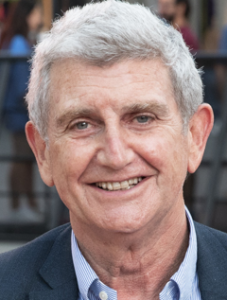
Dr. José Manuel Pérez Tornero
Emeritus Professor at the Autonomous University of Barcelona (UAB) of the UNESCO Chair on Media and Information Literacy and Quality Journalism. Coordinator of the UNESCO Media and Information Literacy and Intercultural Dialogue Cooperation Program. Former President of Spanish Public Radio and Television (RTVE).
He holds the title of Doctor honoris causa from Aix-Marseille University and is a full professor at the Autonomous University of Barcelona. A journalist and media expert, he is recognized as one of the pioneers of media literacy in Europe.As a member of the EU High-Level Group of Experts on Media Literacy, he led studies that facilitated the integration of media literacy as a key objective in European legislation. He also served as a former member of the Board of Directors of the European Broadcasting Union and president of COPEAM. He has authored numerous books, including Humanism and Media Literacy, Educational Television, and his most recent work, The Great Mediatization. In this latest book, he highlights the threats posed by the “digital tsunami” to personal autonomy and freedoms, advocating for critical thinking and the adoption of effective media policies to protect individual liberties.
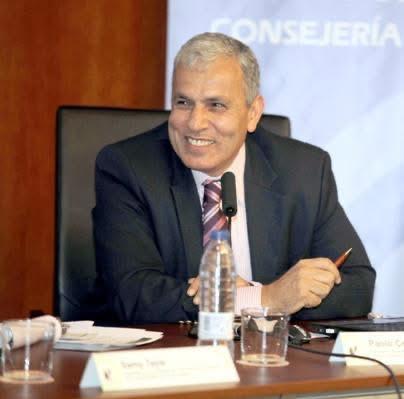
Dr. Samy Tayie
Professor at the Faculty of Mass Communication of Cairo University, Egypt. He also acts as a visiting professor at UAB, Spain. He received his first degrees from Cairo University and his PhDs from Leicester University, UK. and la Sorbonne, France.
His main areas of interest include media and information literacy, social marketing, new communication technology and media research methods. He has published a few books on media research methods, media education, advertising and public relations. He has also published a few articles on different areas of mass communication. He supervised more than 80 MA and PhD theses. He organized and participated in many international meetings in the Middle East, Europe and the United States. He also worked for some regional and international organizations including the United Nations. He is also Lead of Arab States Chapter of UNESCO’s MIL Alliance.
